
[read ebook] The Body: A Guide for Occupants
PDF READ FREE The Body: A Guide for Occupants EBOOK EPUB KINDLE PDF
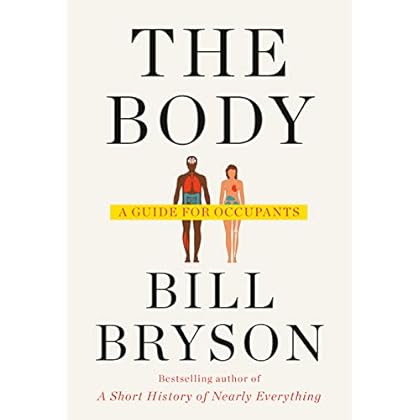
Description of The Body: A Guide for Occupants
Review 'Glorious. . .Having described the physical nature of our world and beyond, from the atomic to the intergalactic, in�The Body�[Bryson] now turns inward to explain�in his lucid, amusing style�what we�re made of. . .Astonishing . .Draws on dozens of experts and a couple hundred books to carry the reader from outside to inside, from up to down and from miraculous operational efficiencies to malignant mayhem when things go awry. . .You will marvel at the brilliance and vast weirdness of your design.'��The Washington Post� 'Delightful. . .Reveals�the thousands of rarely acknowledged tasks our body takes care of as we go about our day. . .Informative, entertaining and often gross (kissing, according to one study, transfers up to one billion bacteria from one mouth to another, along with 0.2 micrograms of food bits). . . Bryson, who gives off a Cronkite-like trustworthy vibe, is good at allaying fears and busting myths.���A.J. Jacobs, The New York Times Book Review� 'Mr. Bryson�s latest book is a Baedeker of the human body, a fact-studded survey of our physiques, inside and out. Many authors have produced such guides in recent years, and some of them are very good. But none have done it quite so well as Mr. Bryson, who writes better, is more amusing and has greater mastery of his material than anyone else. . .[He] is a master explainer, with a gift for the pithy simile and all-encompassing metaphor. . .[His] love of language is often on display, and he can�t resist occasional indulgences on the origins of terms medical and anatomical. . .Mr. Bryson�s account is enlivened by his excellent command of the history of medicine. . .Brisk, provocative and entertaining throughout.'��The Wall Street Journal� 'Fascinating.'��NPR 'Like an adventurer trekking the Appalachian Trail from beginning to end (as this bestselling author did for�A Walk in the Woods), Bryson launches himself into the wilderness of the human anatomy armed with his characteristic thoroughness and wit. He ably dissects the knowns and unknowns of�how we live and die�and all the idiosyncrasies of our shared infrastructure. . .This book is full of such arresting factoids and, like a douser hunting water, Bryson is adept at finding the bizarre and the arcane in his subject matter. . .Amazing.'��USA Today� 'A witty, informative immersion. . .The Body�a delightful, anecdote-propelled read�proves one of his most ambitious yet, as he leads us on a head-to-toe tour of a physique that�s terra incognita to many of us. . .Playful, lucid. . .[Bryson] cover[s] a remarkably large swathe of human corporeal and cerebral experience.'��The Boston Globe 'A directory of wonders. . .Extraordinary. . .�A tour of the minuscule; it aims to do for the human body what his�A Short History of Nearly Everything�did for science. . .The prose motors gleefully along, a finely tuned engine running on jokes, factoids and biographical interludes. . .Wry, companionable, avuncular and always lucid . . .[The Body]�could stand as an ultimate prescription for life.'��The Guardian 'A delightful tour guide. . .Bryson's stroll through human anatomy, physiology, evolution, and illness (diabetes, cancer, infections) is instructive, accessible, and entertaining.'���Booklist, starred review� 'A pleasing, entertaining sojourn into the realm of what makes us tick.'��Kirkus Reviews� Read more About the Author BILL BRYSON's bestselling books include�A Walk in the Woods,�The Life and Times of the Thunderbolt Kid, and�A Short History of Nearly Everything�(which won the Aventis Prize in Britain and the Descartes Prize, the European Union's highest literary award). He was chancellor of Durham University, England's third oldest university, from 2005 to 2011, and is an honorary fellow of Britain's Royal Society. Read more Excerpt. � Reprinted by permission. All rights reserved. 7. THE HEART AND BLOOD�Stopped.� LAST WORD OF THE BR ITISH SURGEON AND ANATOMIST JOSEPH HENRY GREEN (1791� 1863)�WHILE FEELING HIS OWN PULSE�ITHE HEART IS the most misperceived of our organs. For a start, it looks nothing like the traditional symbol associated with Valentine�s Day and lovers� initials carved into tree trunks and the like. (That symbol ?rst appeared, as if from out of nowhere, in paintings from northern Italy in the early fourteenth century, but no one knows what inspired it.) Nor is the heart where we place our right hand during patriotic moments; it is more centrally located in the chest than that. Most curious of all, perhaps, is that we make it the emotional seat of our being, as when we declare that we love someone with all our heart or profess a broken heart when they abandon us. Don�t misunderstand me. The heart is a wondrous organ and fully deserving of our praise and gratitude, but it is not invested even slightly in our emotional well-being.That�s a good thing. The heart has no time for distractions. It is the most single-minded thing within you. It has just one job to do, and it does it supremely well: it beats. Slightly more than once every second, about 100,000 times a day, as many as 3.5 billion times in a lifetime, it rhythmically pulses to push blood through your body�and these aren�t gentle thrusts. They are jolts powerful enough to send blood spurting up to three meters if the aorta is severed.With such an unrelenting work rate, it is a miracle that most hearts last as long as they do. Every hour your heart dispenses around 70 gallons of blood. That�s 1,680 gallons in a day�more gallons pushed through you in a day than you are likely to put in your car in a year. The heart must pump with enough force not merely to send blood to your outermost extremities but to help bring it all the way back again. If you are standing, your heart is roughly four feet above your feet, so there�s a lot of gravity to overcome on the return trip. Imagine squeezing a pump the size of a grapefruit with enough force to move a ?uid four feet up a tube. Now do that again once every second or so, around the clock, unceasingly, for decades, and see if you don�t feel a�bit tired. It has been calculated (and goodness knows how, it must be said) that during the course of a lifetime the heart does an amount of work suf?cient to lift a one-ton object 150 miles into the air. It is a truly remarkable implement. It just doesn�t care about your love life.For all it does, the heart is a surprisingly modest thing. It weighs less than a pound and is divided into four simple chambers: two atria and two ventricles. Blood enters through the atria (Latin for �entry rooms�) and exits via the ventricles (from another Latin word for �chambers�). The heart is not really one pump but two: one that sends blood to the lungs and one that sends it around the body. The output of the two must be in balance, every single time, for it all to work correctly. Of all the blood pumped out of your heart, the brain takes 15 percent, but actually the greatest amount, 20 percent, goes to the kidneys. The journey of blood around your body takes about ?fty seconds to complete. Curiously, the blood passing through the chambers of the heart does nothing for the heart itself. The oxygen that nourishes it arrives via the coronary arteries, in exactly the way oxygen reaches other organs.The two phases of a heartbeat are known as the systole (when the heart contracts and pushes blood out into the body) and diastole (when it relaxes and re?lls). The difference between these two is your�blood pressure. The two numbers in a blood pressure reading�let�s say 120/80, or �120 over 80� when spoken�simply measure the highest and lowest pressures your blood vessels experience with each heart-beat. The ?rst, higher number is the systolic pressure; the second, the diastolic. The numbers speci?cally measure how many millimeters of mercury is pushed up a calibrated tube.Keeping every part of the body supplied with suf?cient quantities of blood at all times is a tricky business. Every time you stand up, roughly a pint and a half of your blood tries to drain downward, and your body has to somehow overcome the dead pull of gravity. To manage this, your veins contain valves that stop blood from ?ow-ing backward, and the muscles in your legs act as pumps when they contract, helping blood in the lower body get back to the heart. To contract, however, they need to be in motion. That�s why it�s important to get up and move around regularly. On the whole, the body manages these challenges pretty well.�For healthy people there is a less than 20 percent difference between blood pressure at the shoulder and at the ankle,� Siobhan Loughna, a lecturer in anatomy at the University of Nottingham Medical School, told me one day. �It�s really quite remarkable how the body sorts that out.�As you may gather from this, blood pressure isn�t a ?xed ?gure, but changes from one part of the body to another, and across the body as a whole throughout the day. It tends to be highest during the day when we are active (or ought to be active) and to fall at night, reaching its lowest point in the small hours. It has long been known that heart attacks are more common in the dead of night, and some authorities think the nightly change in blood pressure may somehow act as a trigger.Much of the early research on blood pressure was done in a series of decidedly gruesome experiments on animals conducted by the Reverend Stephen Hales, an Anglican curate of Teddington, Middlesex, near London, in the early eighteenth century. In one experiment, Hales tied down an aged horse and attached a nine-foot-long glass tube to�its carotid artery by means of a brass cannula. Then he opened the artery and measured how high blood shot up the tube with each dying pulse. He killed quite a number of helpless creatures in his pursuit of physiological knowledge and was roundly condemned for it�the poet Alexander Pope, who lived locally, was especially vocal on the matter�but among the scienti?c community his achievements were celebrated. Hales thus had the double distinction of advancing science while at the same time giving it a bad name. Though Hales was denounced by animal lovers, the Royal Society awarded him its very highest honor, the Copley Medal, and for a century or so Hales�s book Haemastaticks was the last word on blood pressure in animals and man.Well into the twentieth century, many medical authorities believed that high blood pressure was a good thing because it indicated vigor-ous ?ow. We now know, of course, that chronically elevated blood pressure very seriously raises the risk of a heart attack or stroke. A more dif?cult question is, What exactly constitutes high blood pres-sure? For a long time, a reading of 140/90 was generally considered the baseline for hypertension, but in 2017 the American Heart Association surprised nearly everyone by abruptly pushing the number downward to 130/80. That small reduction tripled the number of men and doubled the number of women aged forty-?ve or under who were deemed to have high blood pressure and lifted practically all people over sixty- ?ve into the danger zone. Almost half of all American adults� 103 million people�are on the wrong side of the new blood pressure threshold, up from 72 million previously. At least 50 million Americans, it is thought, are not receiving appropriate medical atten-tion for the condition.Heart health has been one of the success stories of modern medi-cine. The death rate from heart diseases has fallen from almost 600 per 100,000 in 1950 to just 168 per 100,000 today. As recently as 2000, it was 257.6 per 100,000. But it is still the leading cause of death. In the United States alone, more than eighty million people suffer from cardiovascular disease, and the cost to the nation of treating heart disease has been put as high as $300 billion a year.There are lots of ways the heart can falter. It can skip a beat, or more usually have an extra beat, because an electrical impulse mis?res. Some people can have as many as ten thousand of these palpitations a day without being aware of it. For others, an arrhythmic heart is an endless discomforting ordeal. When the heart�s rhythm is too slow, the condition is called bradycardia; when too fast, it is tachycardia.A heart attack and a cardiac arrest, though usually confused by most of us, are in fact two different things. A heart attack occurs when oxygenated blood can�t get to heart muscle because of a blockage in a coronary artery. Heart attacks are often sudden�that�s why they are called attacks�whereas other forms of heart failure are often (though not always) more gradual. When heart muscle downstream of a block-age is deprived of oxygen, it begins to die, usually within about sixty minutes. Any heart muscle we lose in this way is gone forever, which is a bit galling when you consider that other creatures much simpler than we are�zebra ?sh, for instance�can regrow damaged heart tissue. Why evolution deprived us of this useful facility is yet another of the body�s many imponderables.Cardiac arrest is when the heart stops pumping altogether, usu-ally because of a failure in electrical signaling. When the heart stops pumping, the brain is deprived of oxygen and unconsciousness swiftly follows, with death not far behind unless treatment is quickly applied. A heart attack will often lead to cardiac arrest, but you can suffer cardiac arrest without having a heart attack. The distinction between the two is medically important because they require different treat-ments, though the distinction may be a touch academic to the sufferer.All forms of heart failure can be cruelly sneaky. For about a quarter of victims, the ?rst (and, more unfortunately, last) time they know they have a heart problem is when they suffer a fatal heart attack. No less appallingly, more than half of all ?rst heart attacks (fatal or otherwise) occur in people who are ?t and healthy and have no known obvious risks. They don�t smoke or drink to excess, are not seriously overweight, and do not have chronically high blood pressure or even bad cholesterol readings, but they get a heart attack anyway. Living a virtuous life doesn�t guarantee that you will escape heart problems; it just improves your chances.No two heart attacks are quite the same, it seems. Women and men have heart attacks in different ways. A woman is more likely to experience abdominal pain and nausea than a man, which makes it more likely that the problem will be misdiagnosed. Partly for this reason, women who have heart attacks before their mid-?fties are twice as likely to die as a man. Women have more heart attacks than is generally supposed. Twenty-eight thousand women suffer fatal heart attacks in the U.K. each year; about twice as many die of heart disease as die of breast cancer. Some people who are about to experience catastrophic heart failure suffer a sudden, terrifying premonition of impending death. The condition is commonly enough observed that it has a medical name: angor animi, or �anguish of the soul.� For a lucky few victims (insofar as good fortune can be attached to a fatal event), death comes so swiftly that they appear to feel no pain. My own father went to bed one night in 1986 and never woke up. As far as could be told, he died without pain or distress or indeed aware-ness. For reasons unknown, the Hmong people of Southeast Asia are particularly susceptible to a condition known as sudden unexplained nocturnal death syndrome. In it, victims� hearts simply stop beating while they are asleep. Autopsies nearly always show the hearts to look normal and healthy.Hypertrophic cardiomyopathy is the condition that makes ath-letes die suddenly on playing ?elds. It arises from an unnatural (and nearly always undiagnosed) thickening of one of the ventricles and causes eleven thousand sudden unexpected deaths a year among people under forty-?ve in the United States. The heart has more named conditions than just about any other organ, and they are all bad news. If you can go through life without experiencing Prinzmetal angina, Kawasaki disease, Ebstein�s anomaly, Eisenmenger syndrome, Takotsubo cardiomyopathy, or many, many others, you may consider yourself fortunate indeed.Heart disease is now such a common complaint that it is a little�surprising to learn that it is largely a modern preoccupation. Until the 1940s, the principal focus of health care was with conquering infec-tious diseases like diphtheria, typhoid fever, and tuberculosis. Only after many of those were cleared out of the way did it become evident that we had another, growing epidemic on our hands in the form of cardiovascular disease. The triggering event for public awareness seems to have been the death of Franklin Delano Roosevelt. In early 1945, his blood pressure soared to 300/190, and it was clear that this was not a sign of vigor but quite the opposite. When he died soon afterward, aged just sixty- three, the world seemed suddenly to realize that heart disease had become a serious and widespread problem and that it was time to try to do something about it.The result was the celebrated Framingham Heart Study, conducted in the town of Framingham, Massachusetts, just west of Boston. Starting in the autumn of 1948, the Framingham study recruited ?ve thousand local adults and followed them carefully for the rest of their lives. Though the study has been criticized for being almost entirely composed of white people (a de?ciency since corrected), it did at least include women, which was unusually farsighted for the time, particularly because women were not thought to suffer unduly from heart problems then. The study is now in its third generation of volunteers. The idea from the outset was to determine the factors that led some people to have heart problems and others to escape them. It was thanks to the Framingham study that most of the major risks for heart disease were identi?ed or con?rmed�diabetes, smoking, obesity, poor diet, chronic indolence, and so on. In fact, the term �risk factor� is said to have been coined in Framingham.The twentieth century could with some justi?cation be called the Century of the Heart, for no other area of medicine experienced more rapid and revolutionary technical progress. In a single lifetime, we have gone from barely being able to touch a beating heart to� operating on them routinely. As with any complicated and risky medical pro-cedure, it took years of patient work by lots of people to perfect the techniques and devise the apparatus to make it all possible. The dar-ing and personal risk that some researchers took on is sometimes quite extraordinary. Consider the case of Werner Forssmann. In 1929, Forssmann was a young, newly quali?ed doctor working in a hospital near Berlin when he became curious to know if it would be possible to gain direct access to the heart by means of a catheter. Without any idea what the consequences would be, he fed a catheter into an artery in his arm and cautiously pushed it up toward his shoulder and on into his chest until it reached his heart, which, he was grati?ed to discover, didn�t go into arrest when a foreign object invaded it. Then, realizing he needed proof of what he had done, Forssmann walked to the hospital�s radiology department, on another ?oor of the building, and had himself X- rayed to show the shadowy and startling image of the catheter in situ in his heart. Forssmann�s procedure would eventu-ally revolutionize heart surgery, but it attracted almost no attention at the time, largely because he reported it in a minor journal.�Forssmann would be a rather more sympathetic ?gure except that he was an early and ardent supporter of the Nazi Party and the National Socialist German Physicians� League, which was behind the purging of Jews in the quest for German racial purity. It�s not entirely clear how much personal evil he engaged in during the Holocaust, but at the very least he was philosophically despicable. After the war, partly to escape retri-bution, Forssmann worked in obscurity as a family physician in a small town in the Black Forest. He would have been forgotten altogether in the wider world except that two academics from Columbia University in New York, Dickinson Richards and Andr� Cournand, whose work was directly reliant on Forssmann�s original breakthrough, tracked him down and publicized his contribution to cardiology. In 1956, all three men were awarded the Nobel Prize in Physiology or Medicine.Far more personally noble than Forssmann, and no less stoic in his capacity for experimental discomfort, was Dr. John H. Gibbon of the University of Pennsylvania. In the early 1930s, Gibbon began a long and patient quest to build a machine that could oxygenate blood�arti?cially, to make open-heart surgery possible. To test the capacity of blood vessels deep within the body to dilate or constrict, Gibbon stuck a thermometer up his rectum, swallowed a stomach tube, and then had icy water poured down it to determine its effect on his internal body temperature. After twenty years of re?nements, and much heroic swallowing of iced water, Gibbon unveiled the world�s ?rst heart- lung machine at the Jefferson College Hospital in Philadelphia in 1953 and successfully patched a hole in the heart of an eighteen-year-old woman who would otherwise have died. Thanks to his efforts, the woman lived another thirty years.Unfortunately, the next four patients died, and Gibbon gave up on the machine. It then fell to a surgeon in Minneapolis, Walton Lillehei, to improve both the technology and the surgical techniques. Lillehei introduced a re?nement known as controlled cross-circulation in which the patient was hooked up to a temporary donor (usually a close family member) whose blood was circulated through the patient during the period of surgery. The technique worked so well that Lille-hei became widely known as the father of open-heart surgery and enjoyed a great deal of acclaim and ?nancial success. Unfortunately, he wasn�t quite as impeccable in his private affairs as he might have been. In 1973, he was convicted of ?ve counts of tax evasion and a great deal of very imaginative bookkeeping. Among much else, he had claimed a $100 payment to a prostitute as a charitable tax deduction.Although open-heart surgery allowed surgeons to correct many faults they previously couldn�t get at, it couldn�t solve the problem of a heart that wouldn�t beat right. That required the device now universally known as a pacemaker. In 1958, a Swedish engineer named Rune Elmqvist, working in collaboration with the surgeon �ke Senning of the Karolinska Institute in Stockholm, built a pair of experimental cardiac pacemakers at his kitchen table. The ?rst was inserted into the chest of Arne Larsson, a forty-three-year-old patient (and himself an engineer) who was very near death from a heart arrhythmia as a result of a viral infection. The device failed after just a few hours. The backup was inserted and it lasted for three years, though it�kept breaking down and the batteries had to be recharged every few hours. As technology improved, Larsson was routinely ?tted with new pacemakers and lived another forty-three years. When he died in 2002 at the age of eighty-six, he was on his twenty-sixth pacemaker and had outlived both his surgeon Senning and his fellow engineer Elmqvist. The ?rst pacemaker was about the size of a pack of cigarettes. Today�s are no bigger than one American quarter and can last up to ten years.The coronary bypass, which involved taking a length of healthy vein from a person�s leg and transplanting it to direct blood ?ow around a diseased coronary artery, was devised in 1967 by Ren� Favaloro at the Cleveland Clinic in Ohio. Favaloro�s was a story at once inspiring and tragic. He grew up poor in Argentina and became the ?rst member of his family to attain a higher education. Upon qualifying as a doctor, he spent twelve years working among the poor but came to the United States in the 1960s to improve his skills. At the Cleveland Clinic, he was little more than a trainee at ?rst but quickly proved himself adept at heart surgery and in 1967 invented the bypass. It was a comparatively simple but ingenious procedure, and it worked brilliantly. Favaloro�s ?rst patient, a man too ill to walk up a ?ight of stairs, recovered completely and lived another thirty years. Favaloro grew wealthy and celebrated and in the twilight of his career decided to return home to Argentina to build a heart clinic and teaching hospital, where doctors could be trained and needy people treated whether they could afford payment or not. All of this he achieved, but because of challenging economic conditions in Argentina, the hospital got into ?nancial dif?culties. Unable to see a way out, in 2000 he killed himself.The great dream was to transplant a heart, but in many places it faced a seemingly insuperable obstacle: a person could not be declared dead until his heart had been stopped for a speci?ed period, but that was all but certain to render the heart unusable for transplant. To remove a beating heart, no matter how far gone the owner was in all other respects, was to risk prosecution for murder. One place where that law did not apply was South Africa. In 1967, at exactly the time that�Ren� Favaloro was perfecting bypass surgery in Cleveland, Christiaan Barnard, a surgeon in Cape Town, attracted far more of the world�s attention by transplanting the heart of a young woman fatally injured in a car accident into the chest of a ?fty-four-year-old man named Louis Washkansky. It was hailed as a great medical breakthrough, though in fact Washkansky died after just eighteen days. Barnard had much better luck with his second transplant patient, a retired dentist named Philip Blaiberg, who survived for nineteen months.*Following Barnard, other nations moved to let brain death be used as an alternative measure of irreversible lifelessness, and soon heart transplants were being attempted all over, though nearly always with discouraging results. The main issue was an absence of a wholly reliable immunosuppressive drug to deal with rejection. A drug called azathioprine worked sometimes but couldn�t be relied on. Then, in 1969, an employee of the Swiss pharmaceutical company Sandoz named H. P. Frey, while on holiday in Norway, collected soil samples to take back to the Sandoz labs. The company had asked employees to do so when traveling in the hope that they would ?nd potential new antibiotics. Frey�s sample contained a fungus, Tolypocladium in?atum, which had no useful antibiotic properties but proved excellent at sup-pressing immune responses�just the thing needed to make organ transplants possible. Sandoz converted Herr Frey�s little bag of dirt, and a similar sample subsequently found in Wisconsin, into a best-selling medicine called cyclosporine. Thanks to it and some associated technical improvements, by the early 1980s heart transplant surgeons were managing success rates of 80 percent, an extraordinary achieve-ment in a decade and a half. Today some four to ?ve thousand heart transplants are performed globally each year, with an average survival time of ?fteen years. The longest-surviving transplant patient so far�was the Briton John McCafferty, who lived thirty-three years with a transplanted heart before dying in 2016 aged seventy-three.Incidentally, brain death turned out to be not as straightforward as originally thought. Some peripheral parts of the brain, we now know, may live on after all the rest has grown still. At the time of this writing, that is the issue at the center of a long-running case involving a young woman in the United States who was declared brain- dead in 2013 but who has continued to menstruate, a process that requires a functioning hypothalamus�very much a key part of the brain. The young woman�s parents argue that anyone with even part of the brain functioning cannot reasonably be declared brain-dead.As for Christiaan Barnard, the man who began it all, success rather went to his head. He traveled the world, dated movie stars (Sophia Loren and Gina Lollobrigida notably), and became, in the words of someone who knew him well, �one of the world�s great womanizers.� Even worse for his reputation, he made a fortune claiming rejuvenative bene?ts for a range of cosmetics that he most assuredly knew were bogus. He died in 2001, aged seventy-eight, of a heart attack while enjoying himself in Cyprus. His reputation was never again quite what it had been.Remarkably, even with all the improvements in care, you are 70 percent more likely to die from heart disease today than you were in 1900. That�s partly because other things used to kill people ?rst, and partly because a hundred years ago people didn�t spend ?ve or six hours an evening in front of a television with a big spoon and a tub of ice cream. Heart disease is far and away the Western world�s number one killer. As Michael Kinch has written, �Heart disease kills about the same number of Americans each year as cancer, in?uenza, pneumonia, and accidents combined. One in three Americans dies of heart disease and more than 1.5 million suffer a heart attack or stroke each year.�Today the problem is as likely to be overtreatment as under, according to some authorities. Balloon angioplasties as a treatment�for angina (or chest pains) are a case in point, it seems. With an angio-plasty, a balloon is in?ated inside a constricted coronary blood vessel to widen it, and a stent, or piece of tubular scaffolding, is left behind to�keep the vessel permanently open.* The operation is unquestionably�a lifesaver in emergencies, but it has also proven highly popular as an elective procedure. By 2000, a million precautionary angioplasties�were being undertaken in the United States every year, but without any proof that they saved lives. When clinical trials were ?nally�undertaken, the results were sobering. According to The New England Journal of Medicine, for every one thousand nonemergency angioplas-ties in America, two patients died on the operating table, twenty-eight�suffered heart attacks brought on by the procedure, between sixty and ninety experienced a �transient� improvement in their health, and the rest�about eight hundred people�experienced neither bene?t nor harm (unless of course you count the cost, the loss of time, and the anxiety of surgery as harm, in which case there was plenty).Despite this, angioplasties remain extremely popular. In 2013, the former president George W. Bush had an angioplasty at the age of sixty-seven, even though he was in good shape and had no sign of heart problems. Surgeons don�t usually publicly criticize colleagues, but Dr. Steve Nissen, head of cardiology at the Cleveland Clinic, was�scathing. �This is really American medicine at its worst,� he said. �It�s�one of the reasons we spend so much on medicine and don�t get a lot for it.�IIHOW MUCH BLOOD you have depends, as you might suppose, on how big you are. A newborn baby contains only about eight ounces, whereas a fully grown man will have more like ?ve quarts. What is certain is that you are suffused with the stuff. Prick your skin any-where and you will draw blood. Within your modest frame are some twenty-?ve thousand miles of blood vessels (mostly in the form of tiny capillaries), so no part of you is ever far from the refreshment of hemoglobin, the molecule that transports oxygen throughout your body.We all know that blood carries oxygen to our� cells�it is one of the few facts about the human body that everyone does seem to know�but it also does a whole lot more. It transports hormones and other vital chemicals, carries off wastes, tracks down and kills pathogens, makes sure oxygen is directed to the parts of the body where it is most needed, signals our emotions (as when we blush from embar-rassment or grow red with fury), helps to regulate body temperature, and even enables the complicated hydraulics of the male erection. It is, in short, a complex material. By one estimate, a single drop of blood may contain four thousand different types of molecules. That�s why doctors are so fond of blood tests: your blood is positively packed with information.Spin a test tube of blood in a centrifuge and it will separate into four layers: red cells, white cells, platelets, and plasma. Plasma is the most abundant, constituting a little over half of blood�s volume. It is more than 90 percent water with some salts, fats, and other chemicals suspended in it. That isn�t to
Books are everywhere. Libraries big and small and bookstores are splattered all over college campuses and larger cities. They are all filled with one of the most important things of all time—books. Those who read books appreciate the multiple places to find books. Those who aren’t fans of books, don’t understand what could make readers want to obsess over books. There is a reason for their obsession, though. You hear it all the time: read every day.Reading is important because it develops our thoughts, gives us endless knowledge and lessons to read while keeping our minds active. Reading books to help us learn and understand and makes us smarter, not to mention the knowledge, vocabulary and thinking skills we develop.In the world today where information are abundant, reading books is one of the best ways to be informed. Though reading might seem like simple fun, it can be helping your body and mind without you even realising what is happening. What makes reading so important? It can be for these reasons and not just knowledge.For those who don’t enjoy it, you might change your mind after hearing about the benefits. Can something so easy and fun be so helpful in your life? Of course, it can! Reading can be a great benefit to you in many different ways—such as sharpening your mind, imagination, and writing skills. With so many advantages, it should be an everyday occurrence to read at least a little something.Books can hold and keep all kinds of information, stories, thoughts and feelings unlike anything else in this world. Can words, paragraphs, and fictional worlds be all that great for you and your health? It definitely can, and it is a timeless form of entertainment and information
Step-By Step To Download The Body: A Guide for Occupants
- Click The Button "DOWNLOAD" Or "READ ONLINE"
- Sign UP registration to access & UNLIMITED BOOKS
- DOWNLOAD as many books as you like (personal use)
- CANCEL the membership at ANY TIME if not satisfied
- Join Over 80.000 & Happy Readers.
OR

No comments :
Post a Comment